
EURUSD
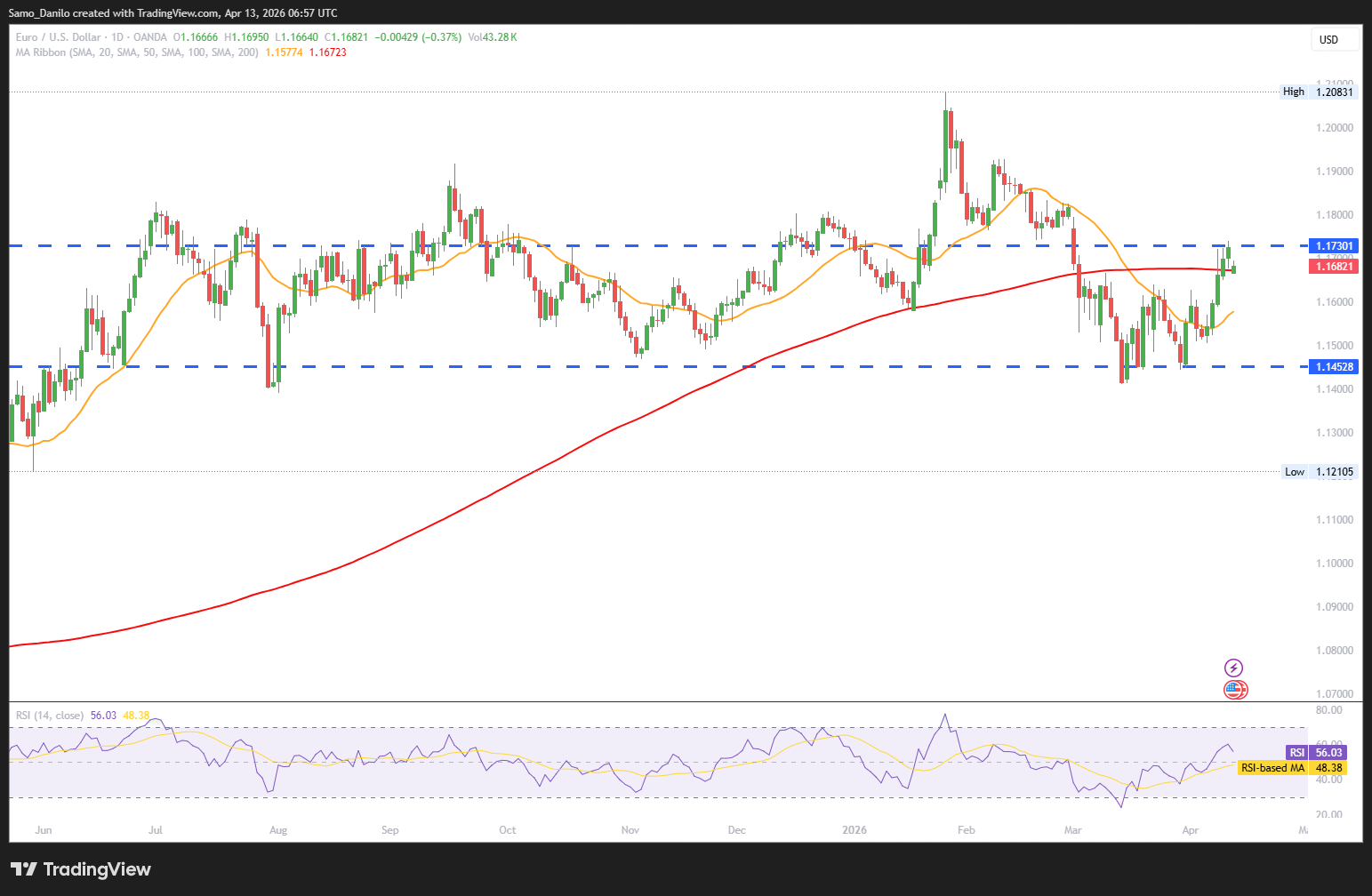
- EUR/USD Price: The EUR/USD is edging higher toward 1.1690 after opening with a downside gap. The rebound suggests some resilience in the euro despite ongoing geopolitical tensions.
- Hungary elections: Peter Magyar secured a decisive election victory over Viktor Orban. While primarily a regional development, political changes in Central Europe can influence broader EU sentiment.
- Strait of Hormuz: Donald Trump announced a blockade of ships in the Strait of Hormuz, with US Central Command confirming operations. Rising geopolitical risk typically boosts safe-haven demand for the USD, limiting EUR/USD upside.
- Norway inflation: Norway’s inflation data came in close to expectations, indicating steady but elevated price pressures. This reflects the broader European trend of persistent inflation amid energy market disruptions.
- Analyst outlook: Analysts from Nordea expect multiple ECB rate hikes starting in June. This outlook supports the euro as markets continue to price in a more aggressive tightening cycle from the European Central Bank.
| SMA (20) | Slightly Falling |  |
|
| RSI (14) | Rising |  | |
| MACD (12, 26, 9) | Slightly Rising | |
Closing statement: EUR/USD is attempting to recover, supported by ECB tightening expectations, but geopolitical escalation and safe-haven demand for the USD continue to cap upside momentum.
GBPUSD
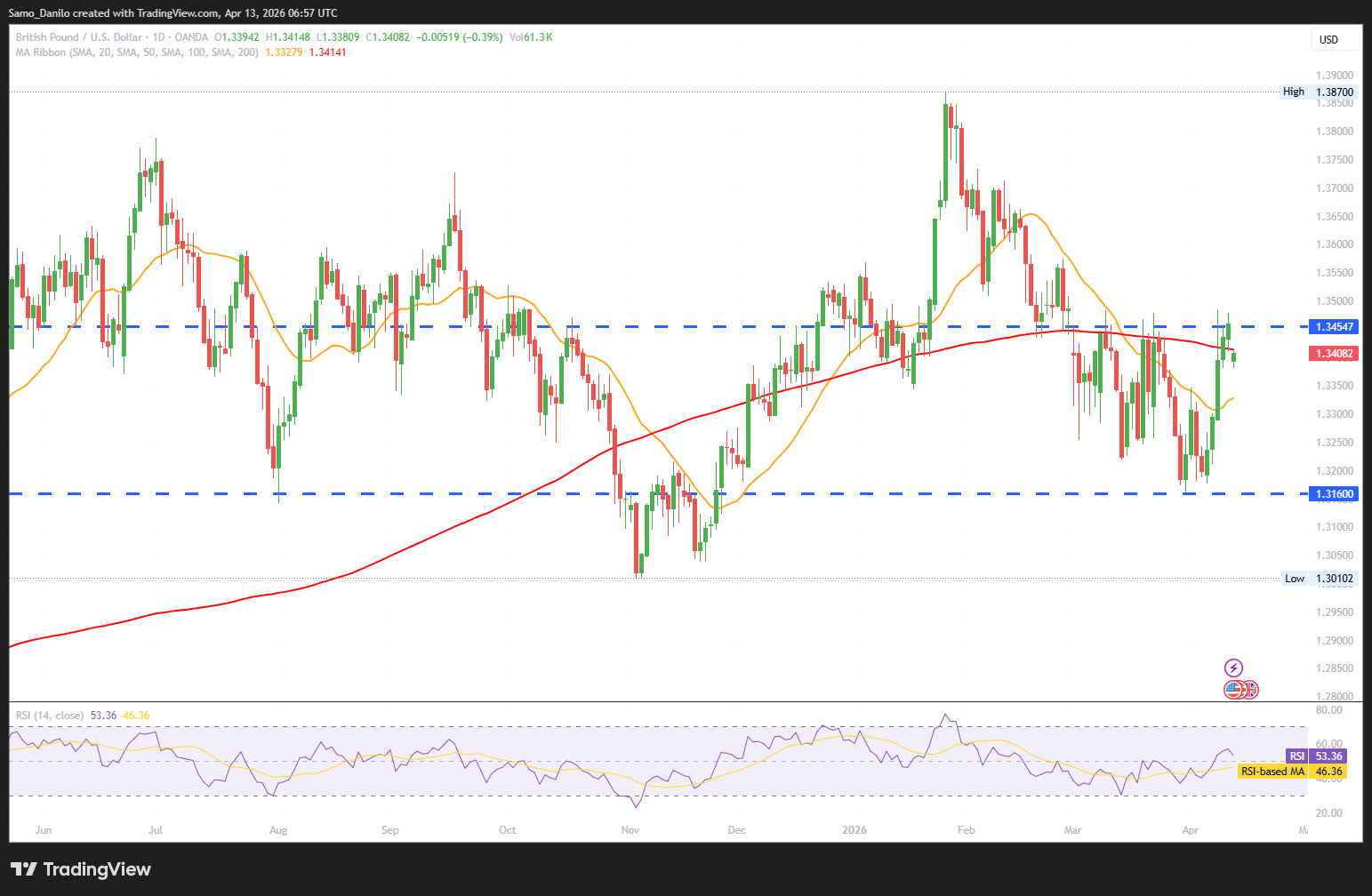
- GBP/USD Price: The GBP/USD has snapped its five-day winning streak, opening with a gap down and trading around 1.3400. The move reflects a shift toward risk aversion and renewed USD strength.
- Strait of Hormuz: Iran’s Revolutionary Guards warned that any military presence near the Strait of Hormuz would be treated as a ceasefire violation. This sharp escalation risk supports safe-haven demand for the US Dollar.
- BoE signals: The Bank of England has signaled a possible rate hike as early as April. While supportive for the currency in theory, tighter policy amid fragile growth increases downside risks for the UK economy.
- Business confidence: A survey by Deloitte showed UK corporate confidence plunging to its lowest level since the pandemic. Rising energy costs and higher interest rates are weighing heavily on sentiment.
- US Inflation: March CPI data from the US showed a sharp rise in inflation, driven largely by energy prices. Stronger inflation reinforces expectations for tighter policy from the Federal Reserve, supporting the USD.
| SMA (20) | Falling | | |
| RSI (14) | Slightly Rising | |
|
| MACD (12, 26, 9) | Slightly Falling | |
Closing statement: GBP/USD faces downside pressure as geopolitical tensions and strong US inflation boost the Dollar, while weakening UK confidence and economic risks weigh on the Pound.
XAUUSD
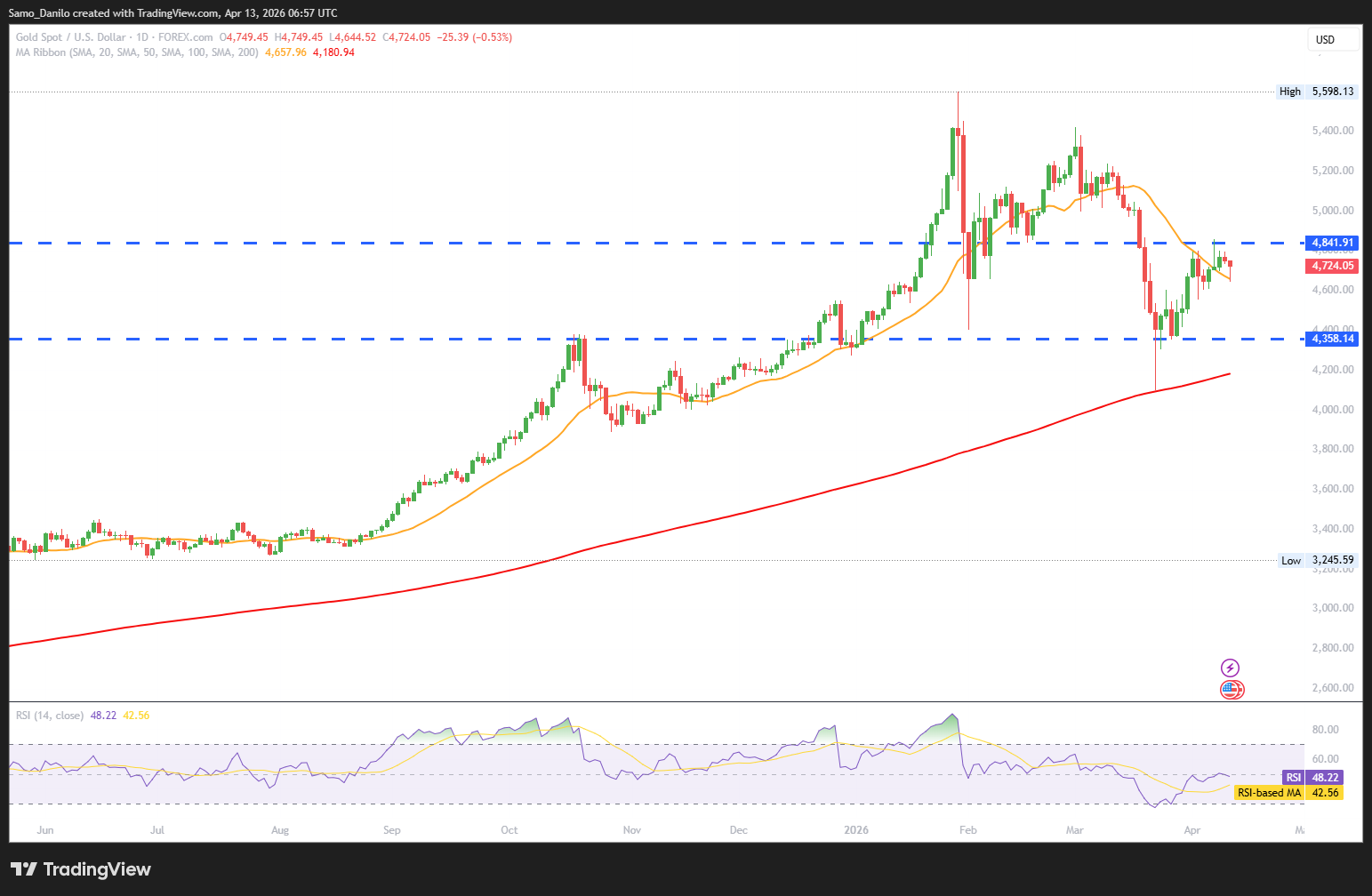
- XAU/USD Price: The XAU/USD has bounced from the $4,650 area, recovering a large portion of its weekly gap-down losses. The rebound reflects mixed sentiment, with buyers stepping in at lower levels.
- Negotiations progress: JD Vance stated that a final offer was rejected by Iran, prolonging the stalemate. Continued geopolitical uncertainty typically underpins gold through safe-haven demand.
- Consumer sentiment: Data from the University of Michigan showed consumer sentiment dropping sharply to 47.6. This signals deteriorating economic confidence, which can support gold as a defensive asset.
- Inflation expectations: US households now expect inflation to climb to 4.8% over the next year, largely driven by higher energy prices. Rising inflation expectations can be supportive for gold, though they also increase the likelihood of tighter monetary policy.
- Fed's Daly: Mary Daly indicated that current policy is restrictive enough to control inflation while supporting employment. This balanced stance limits aggressive rate expectations, offering some support to gold.
| SMA (20) | Falling | | |
| RSI (14) | Slightly Rising | |
|
| MACD (12, 26, 9) | Slightly Falling | |
Closing statement: Gold is recovering as geopolitical tensions and weak consumer sentiment boost safe-haven demand, though rising inflation expectations and steady Fed policy keep gains in check.
CRUDE OIL
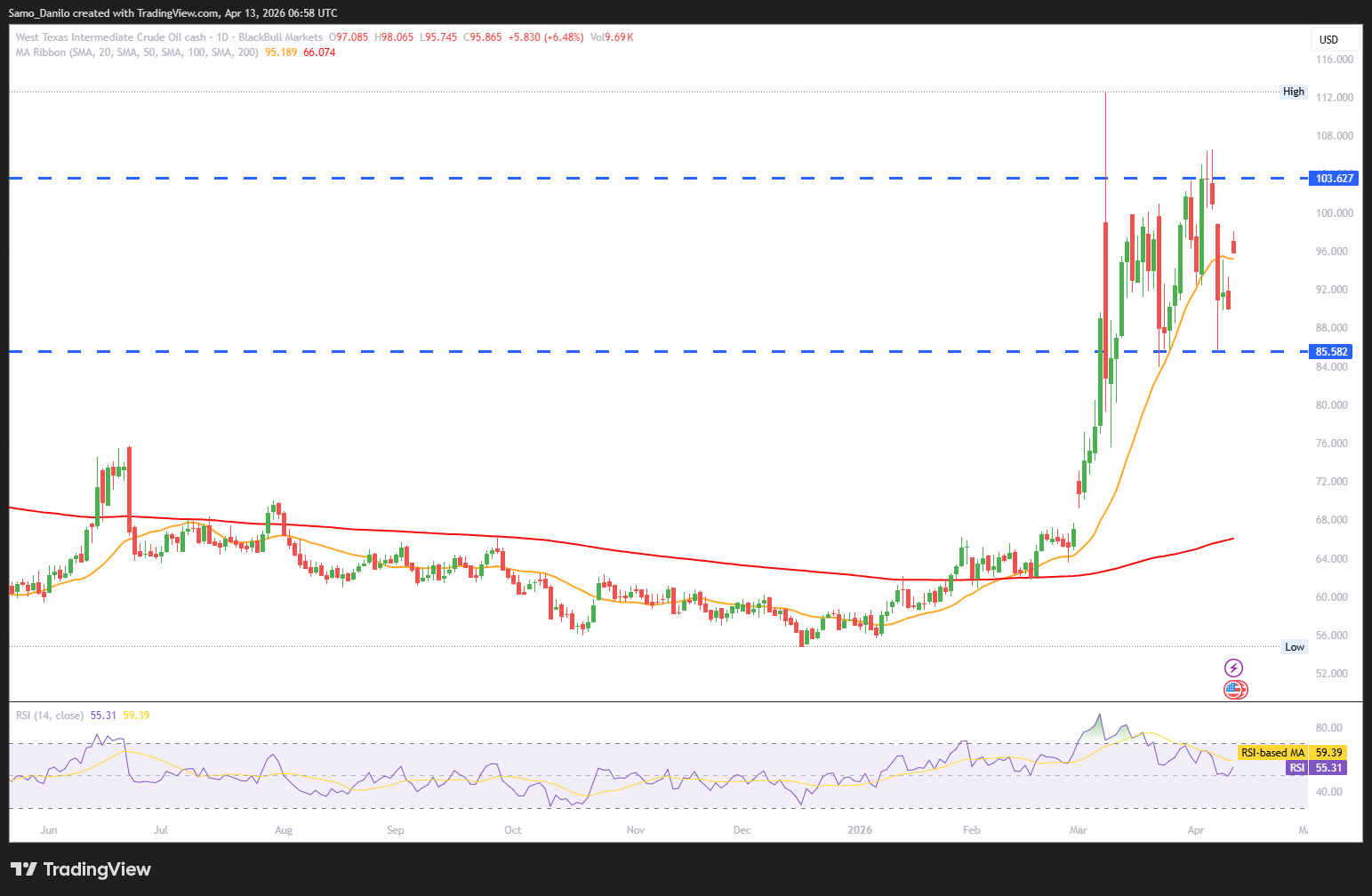
- Crude Oil Price: The WTI crude oil is trading nearly 6% higher around $97.00. The strong rally reflects renewed supply fears and heightened geopolitical risk.
- Peace negotiations: A potential Russia-Ukraine peace deal after signs of progress in negotiations. However, both sides accused each other of violating a 32-hour Orthodox Easter ceasefire, reporting over a thousand drones and shelling attacks shortly after the truce began.
- Middle East: Ongoing Israeli strikes in Lebanon add to broader regional instability. While this supports safe-haven demand for the USD, it also raises concerns about potential spillovers into energy markets.
- Jet fuel: ACI Europe warned that restricted flows through the Strait of Hormuz could lead to a jet fuel shortage within weeks. This underscores the severity of supply disruptions and their economic impact.
- Russian supply: Russia has resumed limited exports via the Novorossiysk port, though capacity remains constrained. The partial recovery offers only modest relief to tight global supply conditions.
| SMA (20) | Rising | | |
| RSI (14) | Slightly Rising | |
|
| MACD (12, 26, 9) | Slightly Rising | |
Closing statement: WTI remains strongly supported as geopolitical tensions and supply disruptions dominate, with only limited offset from partial recovery in Russian exports.
DAX
- DAX 40 Price: The DAX 40 is trading around 23,570 points, showing relative stability despite a challenging macro and geopolitical backdrop.
- Tax cuts: Friedrich Merz announced temporary reductions in fuel taxes to curb rising energy costs. This measure could support consumer spending and partially offset inflationary pressures.
- Airline sector: Shares of Lufthansa declined sharply amid rising oil prices and renewed pilot strikes. Higher fuel costs remain a key headwind for the aviation sector.
- Government support: The CDU/CSU and SPD coalition plans to allow tax-free crisis bonuses of up to €1,000. This fiscal support could help sustain consumption in a high-inflation environment.
- Tourism sector: The DAX 40 remains relatively stable as government support measures and strong tourism data offset pressures from rising energy costs and sector-specific weaknesses.
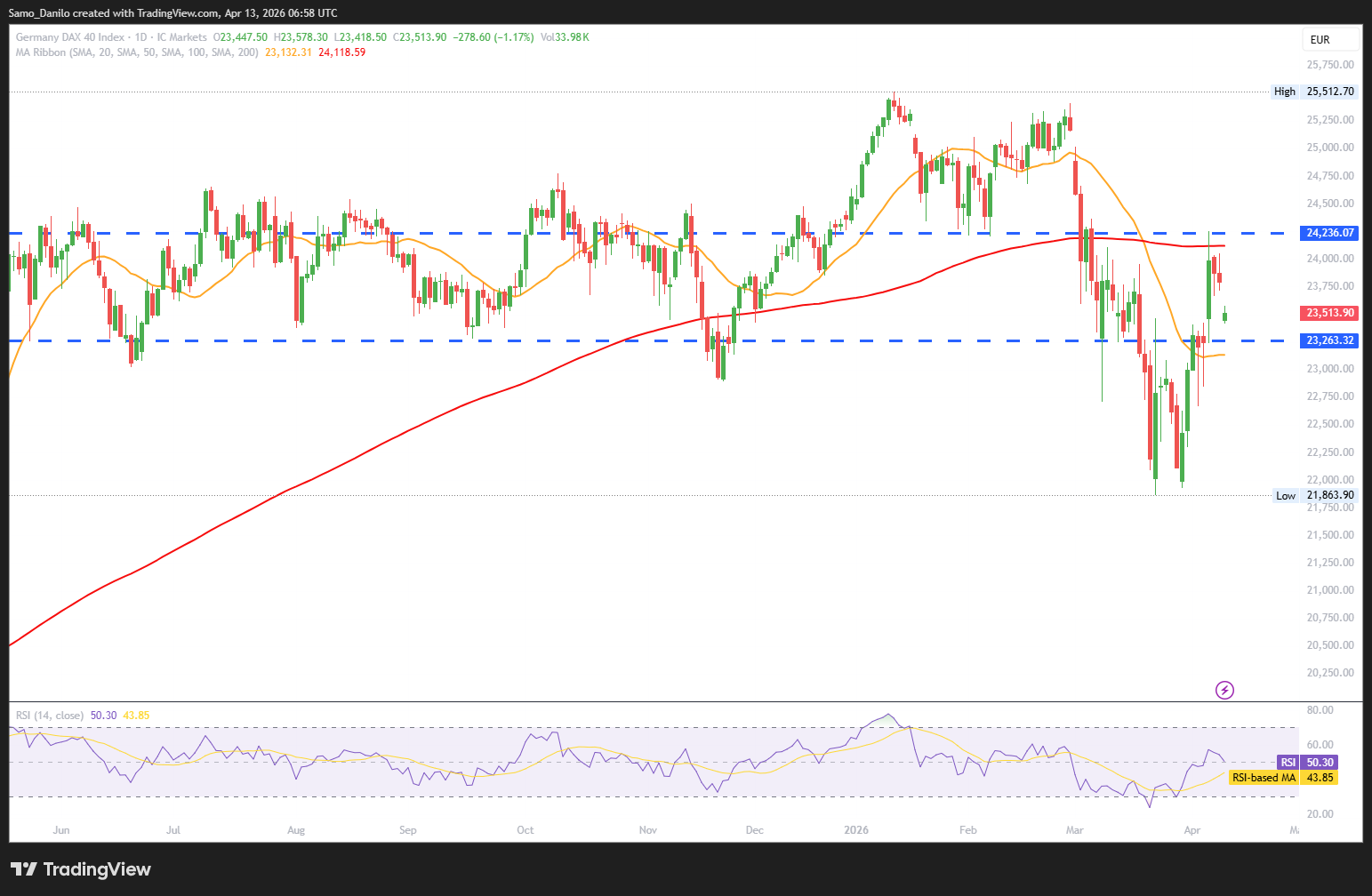
| SMA (20) | Falling | | |
| RSI (14) | Slightly Rising | |
|
| MACD (12, 26, 9) | Slightly Falling | |
Closing statement: The DAX 40 remains relatively stable as government support measures and strong tourism data offset pressures from rising energy costs and sector-specific weaknesses.