
EURUSD
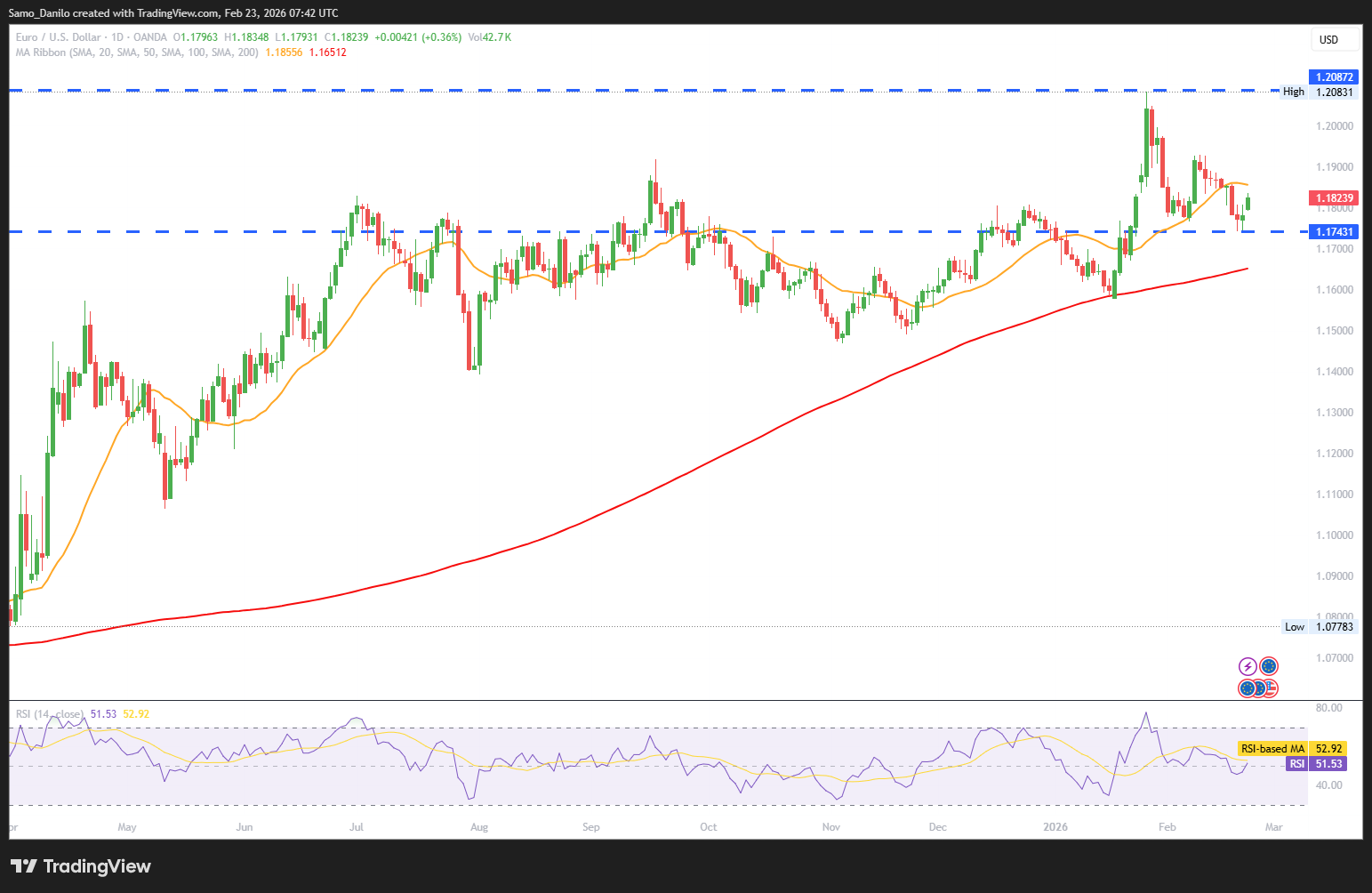
- EUR/USD Price: EUR/USD is extending its advance for a second consecutive session, maintaining levels comfortably above the 1.1800 handle during the European trading hours. This price behavior signals sustained short-term bullish momentum and suggests that buyers remain in control for now.
- US Dollar weakness: The US Dollar remains under pressure as the “Sell America” narrative resurfaces across markets. This sentiment has been reinforced by renewed uncertainty following tariff-related comments from Donald Trump, which are weighing on confidence in US economic and trade policy stability.
- Trade relations: According to reporting by Bloomberg, the European Parliament’s trade leadership has indicated that the European Union may suspend ratification of its trade agreement with the US. This highlights growing uncertainty around transatlantic trade relations, potentially undermining the Dollar further while supporting the Euro.
- Eurozone data: The Euro has received additional backing from stronger-than-expected preliminary HCOB PMI data for February. The Composite PMI’s rise to 51.9 indicates an acceleration in economic activity, improving the Eurozone’s growth outlook and reinforcing demand for the common currency.
- EU trade: Comments from EU Trade Commissioner Sefcovic regarding the unsustainability of the EU-China trade imbalance add to the broader theme of global trade realignment. While not directly Euro-positive in isolation, these remarks underline the EU’s active engagement on trade issues, which may enhance policy credibility over the medium term.
| SMA (20) | Rising |  | |
| RSI (14) | Slightly Falling |  |
|
| MACD (12, 26, 9) | Slightly Rising | |
Closing statement: Overall, EUR/USD remains supported by sustained US Dollar weakness and improving Eurozone data, suggesting further upside potential as long as trade-related uncertainty continues to pressure the Greenback and European economic indicators remain constructive.
GBPUSD
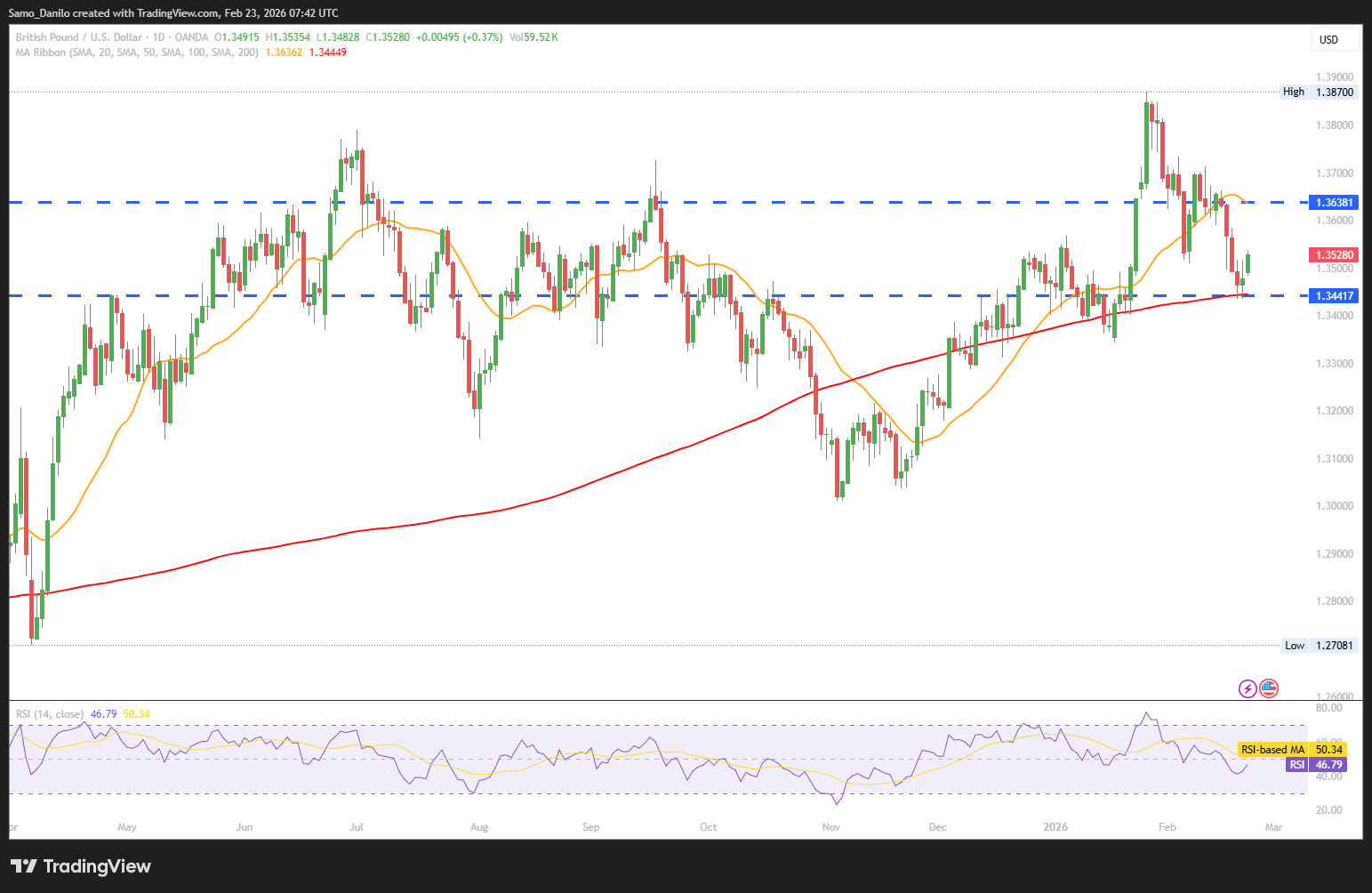
- GBP/USD Price: GBP/USD continues to advance, pushing toward the 1.3550 level as buying interest remains firm at the start of the week. The pair’s upside is primarily driven by broad-based US Dollar weakness, allowing Sterling to capitalize on supportive domestic factors.
- Retail sales: Stronger-than-expected UK economic data has added momentum to the British Pound, with January Retail Sales rising 4.5% year-over-year versus expectations of 2.8%. This sharp upside surprise points to resilient consumer demand and strengthens confidence in the near-term UK growth outlook.
- UK data: February flash Services PMI data from S&P Global came in at 53.9, exceeding forecasts and confirming continued expansion in private-sector activity. However, the persistence of job losses tempers optimism and suggests that growth remains uneven beneath the surface.
- Policy expectations: Money markets are assigning a 75%–80% probability that the Bank of England will cut interest rates by 25 basis points at its March meeting. These expectations may cap Sterling gains over the medium term, even as short-term data surprises offer temporary support.
- Tariffs news: The US Supreme Court ruling against tariffs imposed without Congressional approval has added complexity to the US trade outlook. Subsequent signals from Donald Trump about introducing a new global tariff regime have prolonged uncertainty, intensifying selling pressure on the US Dollar.
| SMA (20) | Rising | | |
| RSI (14) | Slightly Falling | |
|
| MACD (12, 26, 9) | Slightly Falling | |
Closing statement: GBP/USD remains supported by robust UK data and elevated US policy uncertainty, but expectations of a Bank of England rate cut could limit upside, suggesting the pair may consolidate or advance cautiously in the near term.
XAUUSD
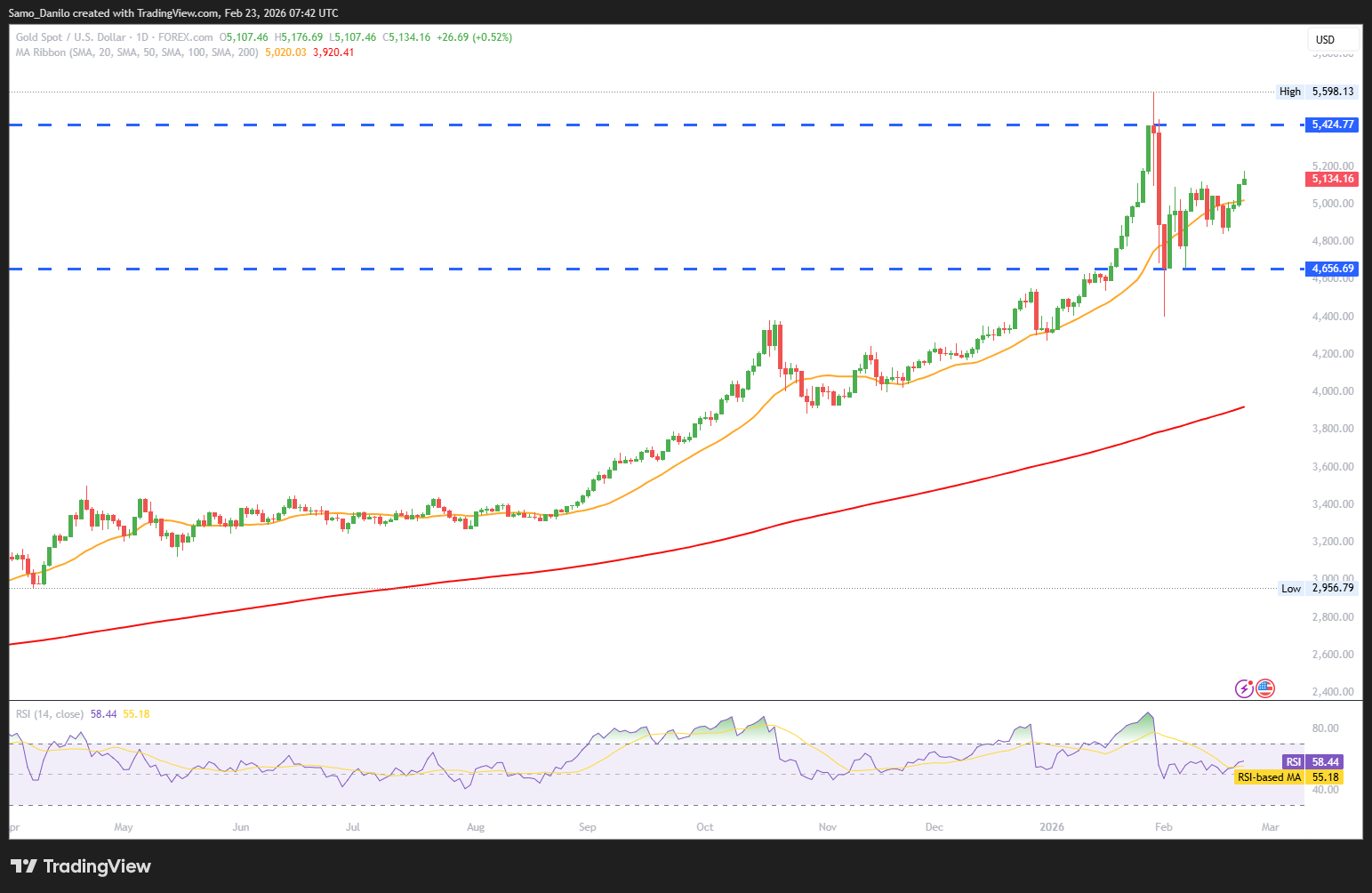
- XAU/USD Price: Gold maintains a bullish bias near its monthly highs as it consolidates above last week’s breakout beyond the $5,100 level. This sustained strength reflects strong underlying demand and signals that buyers remain confident following the recent upside technical confirmation.
- Tariff uncertainty: Comments from Scott Bessent and other White House officials indicate that the US is seeking alternative legal avenues to preserve existing tariffs introduced under Donald Trump. This reinforces uncertainty around US trade policy, a backdrop that traditionally supports safe-haven assets such as gold.
- China policy: In China, expectations that Loan Prime Rates will remain unchanged point to a stable but cautious monetary stance. While this represents a near-term non-event, continued policy inertia underscores muted growth impulses, indirectly supporting gold through a subdued global risk environment.
- Geopolitical developments: Geopolitical tensions are elevated as US and Iranian officials prepare to meet in Geneva to discuss an Iranian nuclear proposal. Such high-stakes diplomatic engagements tend to heighten risk sensitivity, sustaining defensive demand for gold as a hedge against potential escalation.
- CBs communication: Markets are also awaiting remarks from Bank of England External Member Alan Taylor and Federal Reserve Governor Christopher Waller. Any signals on inflation, rates, or financial stability could influence yields and the US Dollar, with direct implications for gold pricing.
| SMA (20) | Rising | | |
| RSI (14) | Rising | | |
| MACD (12, 26, 9) | Slightly Rising | |
Closing statement: XAU/USD remains underpinned by policy uncertainty, geopolitical risk, and constructive technical momentum, suggesting scope for further gains as long as macro and geopolitical risks stay elevated and yields remain contained.
CRUDE OIL
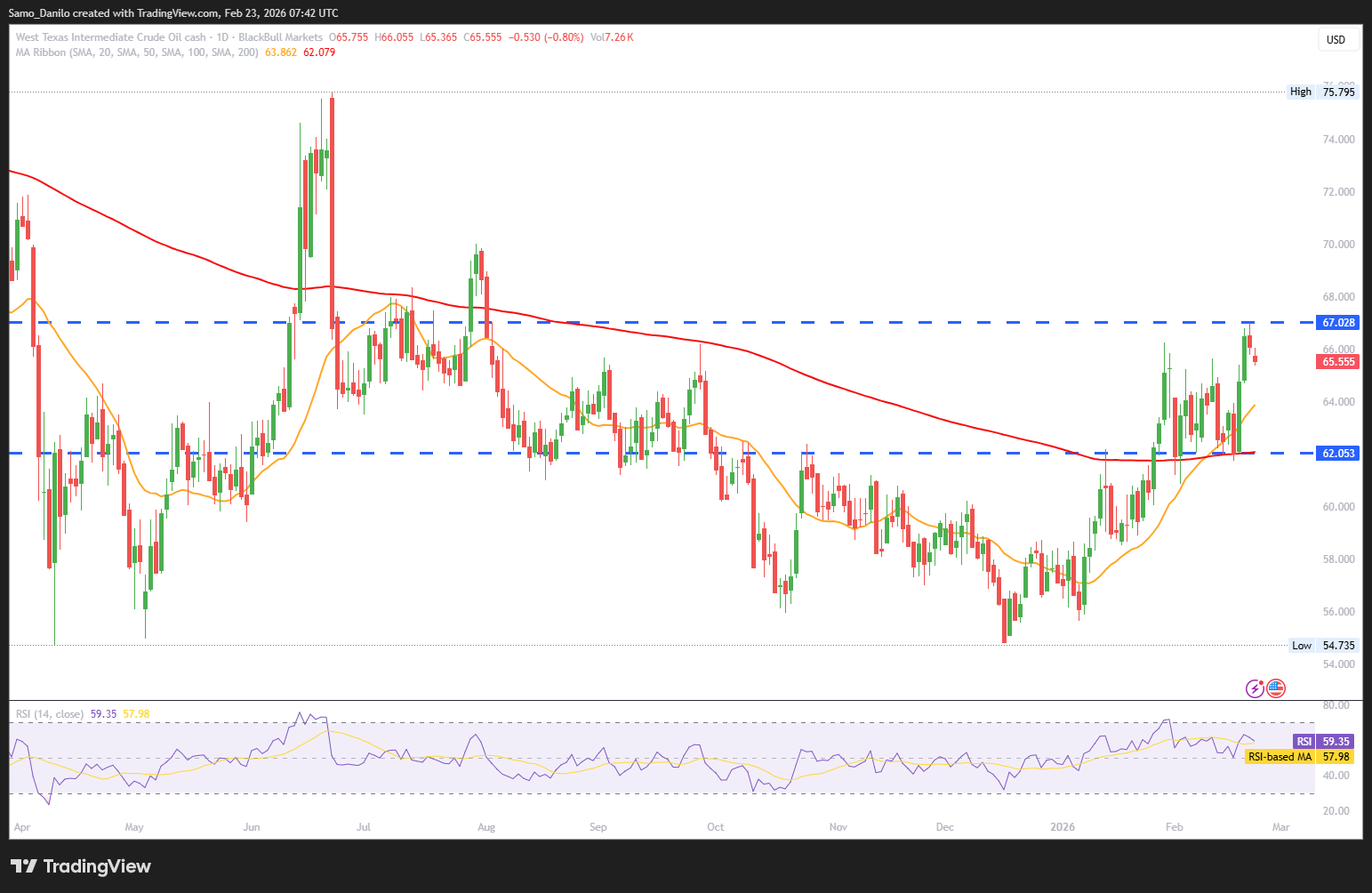
- Crude Oil Price: West Texas Intermediate is trading around the $65.70 area during early European hours, reflecting a relatively stable but cautious market tone. Price action suggests traders are balancing geopolitical developments against supply-side data and upcoming inventory figures.
- Iran signals: Comments from Iranian Foreign Minister Abbas Araghchi pointing to a potential “win-win” diplomatic solution have slightly eased immediate geopolitical risk premiums. Any progress toward an agreement could eventually raise expectations of increased Iranian oil supply, acting as a medium-term headwind for prices.
- Russian oil: An investigation by the Financial Times revealed a complex network of companies coordinating to obscure the origin of Russian oil exports. This underscores the continued flow of sanctioned oil into global markets, reinforcing concerns about effective supply remaining higher than headline figures suggest.
- China’s imports: Data compiled by Bloomberg shows that China’s increased imports of Russian crude are more than offsetting reduced spot purchases by Indian refiners. The rise to over 2.0 million bpd in February highlights sustained demand absorption and reshuffling of global crude flows rather than an outright loss of supply.
- Inventory data: Market participants are positioning ahead of the upcoming crude inventory report from the American Petroleum Institute. The data could provide short-term direction for prices, particularly if it signals unexpected shifts in US supply-demand balances.
| SMA (20) | Rising | | |
| RSI (14) | Rising | | |
| MACD (12, 26, 9) | Rising | | |
Closing statement: WTI prices remain range-bound as diplomatic optimism, resilient Russian supply flows, and strong Chinese demand offset each other, leaving near-term direction dependent on US inventory data and further clarity on geopolitical developments.
DAX
- DAX Price: The German DAX is trading sideways around 25,120 points, hovering near mid-January highs. This sideways movement indicates a period of consolidation after recent gains, with market participants awaiting further economic signals before committing to new directional bets.
- German data: The February Ifo index release is anticipated to show improvement following a strong PMI report. The manufacturing sector’s growth, the first since the European Central Bank began hiking rates in 2022, suggests underlying resilience in German economic activity.
- Wage dynamics: The ECB’s negotiated wages indicator rose to 2.95% year-over-year in Q4, up from 1.9% in Q3. This increase largely reflects one-off inflation compensation payments rather than persistent wage pressures, suggesting limited immediate risk of accelerating domestic inflation impacting the equity market.
- US GDP: A weak US GDP print showing 1.4% annualized growth in Q4, down from 4.4% in Q3, highlights a sharp slowdown in the US economy amid the longest-ever government shutdown. Slower US growth can have spillover effects on export-oriented German companies, potentially constraining DAX momentum.
- Tariff developments: German Chancellor Friedrich Merz indicated that the tariff burden on the German economy is expected to ease following the US Supreme Court ruling on Trump-era tariffs. This development reduces trade-related uncertainty, supporting investor sentiment for German equities.
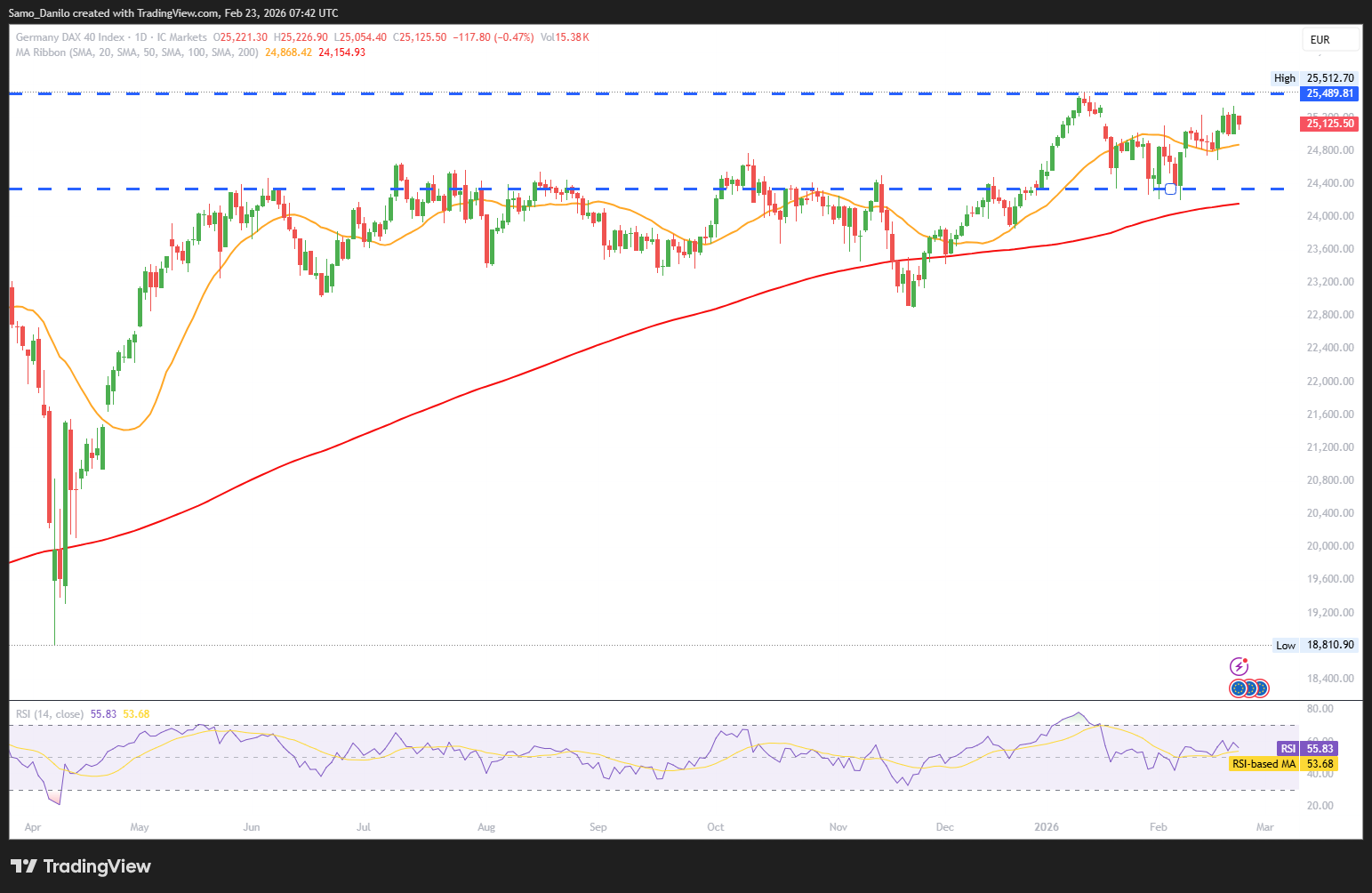
| SMA (20) | Slightly Rising | |
| RSI (14) | Slightly Rising | |
| MACD (12, 26, 9) | Slightly Rising | |
Closing statement: DAX remains range-bound near multi-week highs, supported by resilient domestic indicators and easing trade tensions, though global growth concerns, particularly from the US, may continue to cap strong upward momentum in the near term.