
EURUSD
- EUR/USD Price: The EUR/USD pair is trading modestly lower around the 1.1425 level as investors shift toward the safety of the US Dollar. The risk-off environment is weighing on the euro, with cautious market sentiment limiting demand for risk-sensitive currencies.
- Fed expectations: Markets remain positioned for a more hawkish Federal Reserve under new Chair Kevin Warsh following last week's decision to leave interest rates unchanged at 3.50%–3.75%. Expectations are that the Fed will maintain a restrictive policy stance for longer.
- US-Iran negotiations: US Vice President JD Vance stated that Iran had agreed to allow nuclear monitors into the country following talks in Switzerland, suggesting potential diplomatic progress. However, Iran's denial of any new commitments has created uncertainty over the negotiations, keeping geopolitical risks in focus and supporting demand for safe-haven assets.
- ECB's Lagarde: ECB President Christine Lagarde acknowledged that the recent inflation shock remains significant but emphasized that inflation expectations remain well anchored and that there is no evidence of harmful second-round inflation effects.
- PMI data: Investors are awaiting the preliminary PMI readings from Germany, the Eurozone, and the United States for fresh insight into business activity.
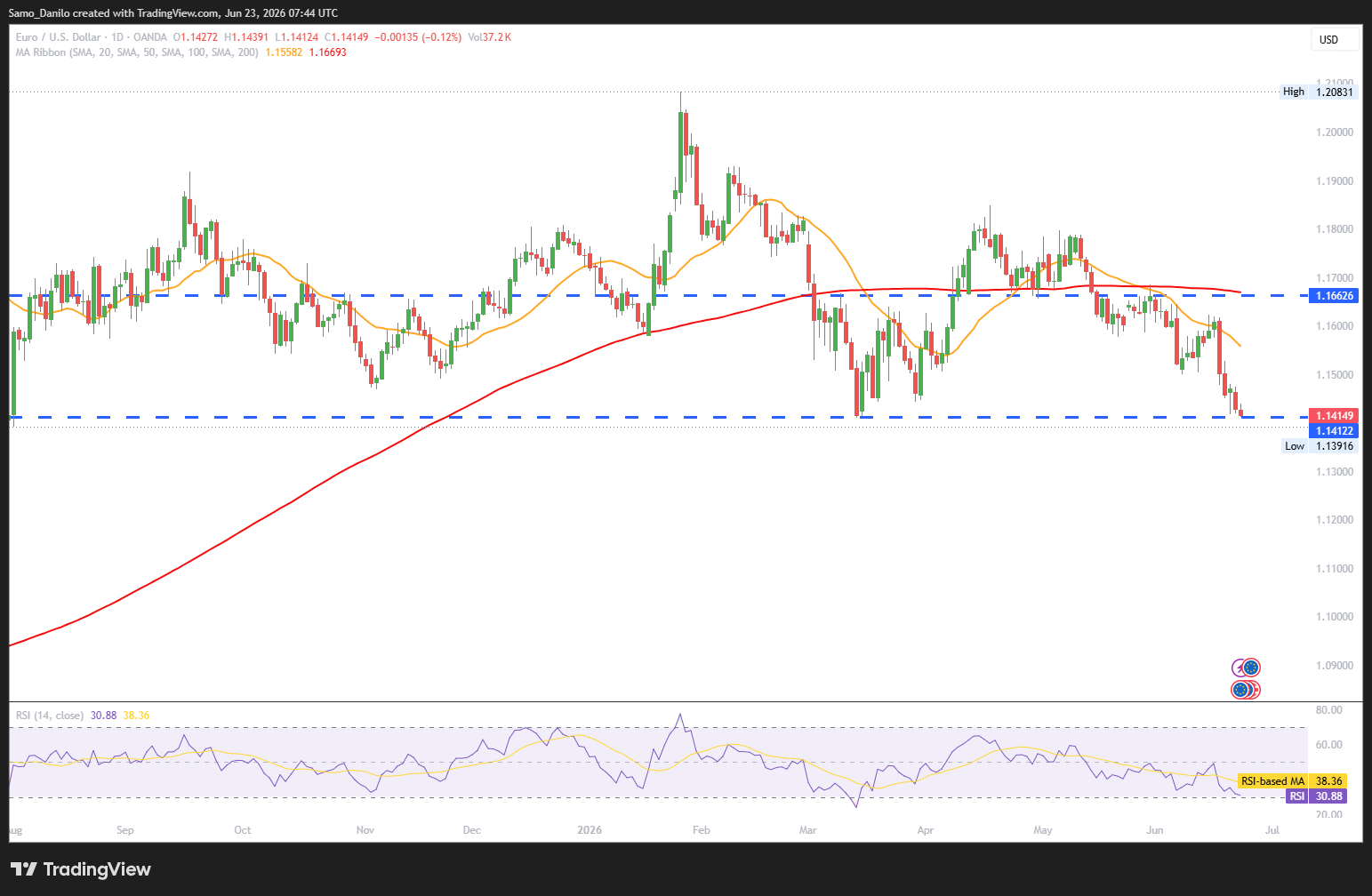
| SMA (20) | Slightly Falling |  |
|
| RSI (14) | Falling | | |
| MACD (12, 26, 9) | Falling | | |
Closing statement: EUR/USD remains under pressure as safe-haven demand and expectations of a relatively hawkish Federal Reserve continue to favor the US Dollar. While the ECB maintains confidence that inflation expectations remain anchored, the pair's near-term direction will largely depend on upcoming PMI data and whether it points to stronger economic momentum in either the Eurozone or the United States.
GBPUSD
- GBP/USD Price: The GBP/USD pair is trading lower during Tuesday's European session, slipping below the 1.3250 level.
- UK political transition: Prime Minister Keir Starmer's resignation has paved the way for Greater Manchester Mayor Andy Burnham to launch a leadership bid, while other potential candidates may also enter the race over the summer. The leadership contest introduces additional political uncertainty, which could weigh on investor confidence and keep the pound under pressure until greater policy clarity emerges.
- Diplomatic efforts: The United States is set to mediate another round of negotiations aimed at ending hostilities between Hezbollah and Israel in southern Lebanon. Renewed diplomatic engagement has improved market sentiment by raising hopes that tensions in the region can be contained.
- Middle East: The apparent de-escalation of fighting in Lebanon, following Iran's threats to close the Strait of Hormuz and President Trump's warning of renewed military action, has reduced immediate geopolitical concerns.
- US data: Markets are now focused on the release of the US S&P Global Flash PMI surveys and housing market data. Stronger-than-expected readings would reinforce confidence in the resilience of the US economy and could strengthen the dollar further, while weaker data may allow GBP/USD to recover some of its recent losses.
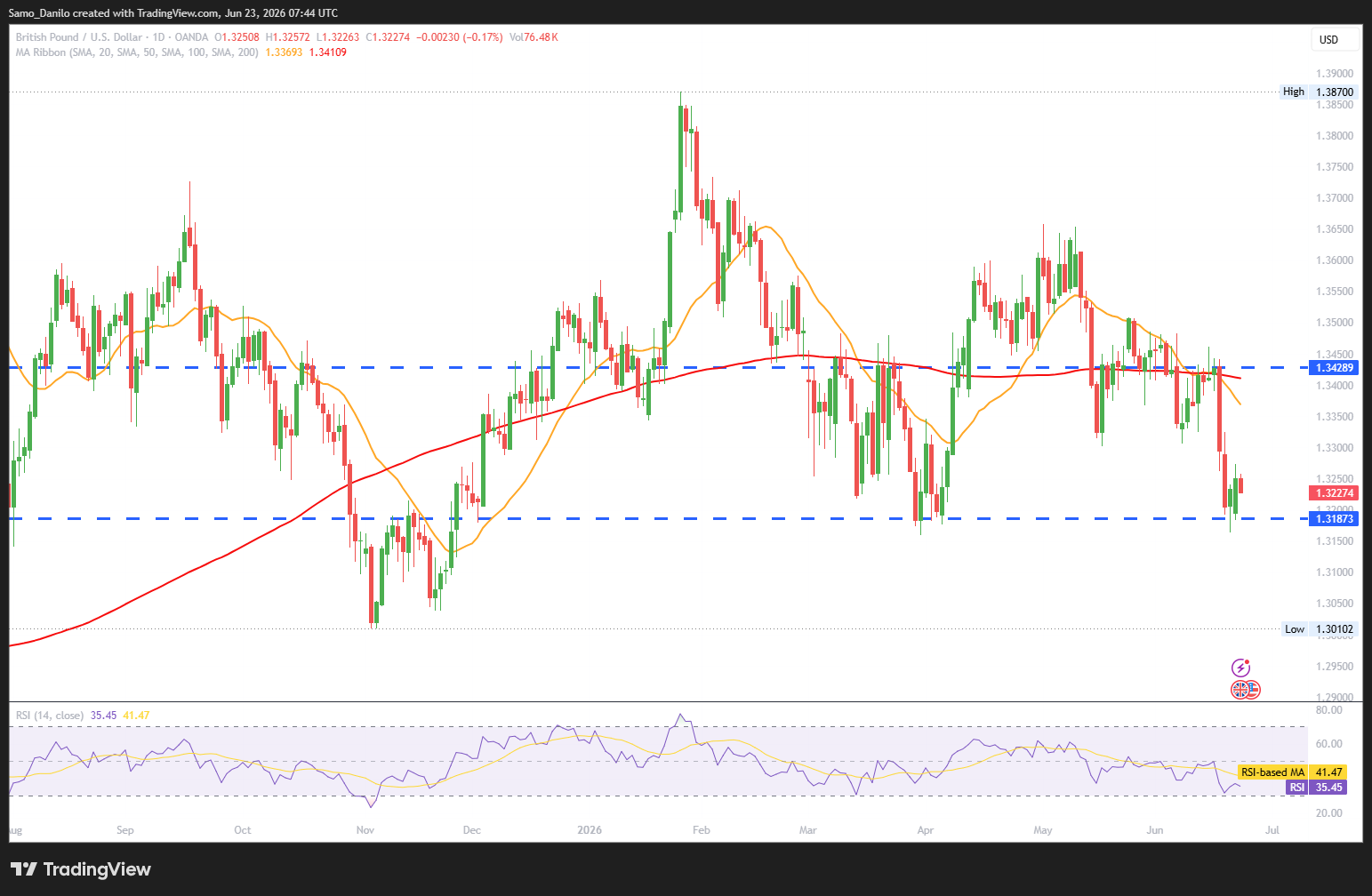
| SMA (20) | Falling | | |
| RSI (14) | Falling | | |
| MACD (12, 26, 9) | Falling | | |
Closing statement: GBP/USD remains under pressure as political uncertainty in the UK combines with continued US Dollar strength. While easing geopolitical tensions have improved overall market sentiment, the pair's near-term direction will likely be driven by upcoming US economic data and whether it reinforces expectations of continued economic resilience and relatively restrictive Federal Reserve policy.
XAUUSD
- XAU/USD Price: Gold extends its losses during Tuesday's European session, dropping to around the $4,115 level, its lowest point in nearly two weeks. The decline is primarily driven by broad-based US Dollar strength.
- Iran's stance: Iran's chief negotiator and parliamentary speaker, Mohammad Bagher Ghalibaf, stated that the Strait of Hormuz will remain under Tehran's administration and will not return to its pre-war status.
- Fed's Goolsbee: Chicago Fed President Austan Goolsbee acknowledged that inflation is moving in the wrong direction and remains well above the Federal Reserve's 2% target. His remarks reinforce expectations that policymakers will remain cautious about easing monetary policy and could support further policy tightening if inflation pressures persist.
- Fed rate: According to CME FedWatch pricing, markets now assign an 89% probability of a Federal Reserve rate hike in December, a sharp increase from 61% before last week's FOMC meeting.
- PCE inflation: Investors are closely watching Thursday's US Core PCE inflation report, the Federal Reserve's preferred measure of inflation. A stronger-than-expected reading above 2.6% year-over-year would reinforce expectations for prolonged restrictive monetary policy and could extend Gold's recent decline, while a softer inflation print may trigger a relief rally by reducing expectations of additional rate hikes.
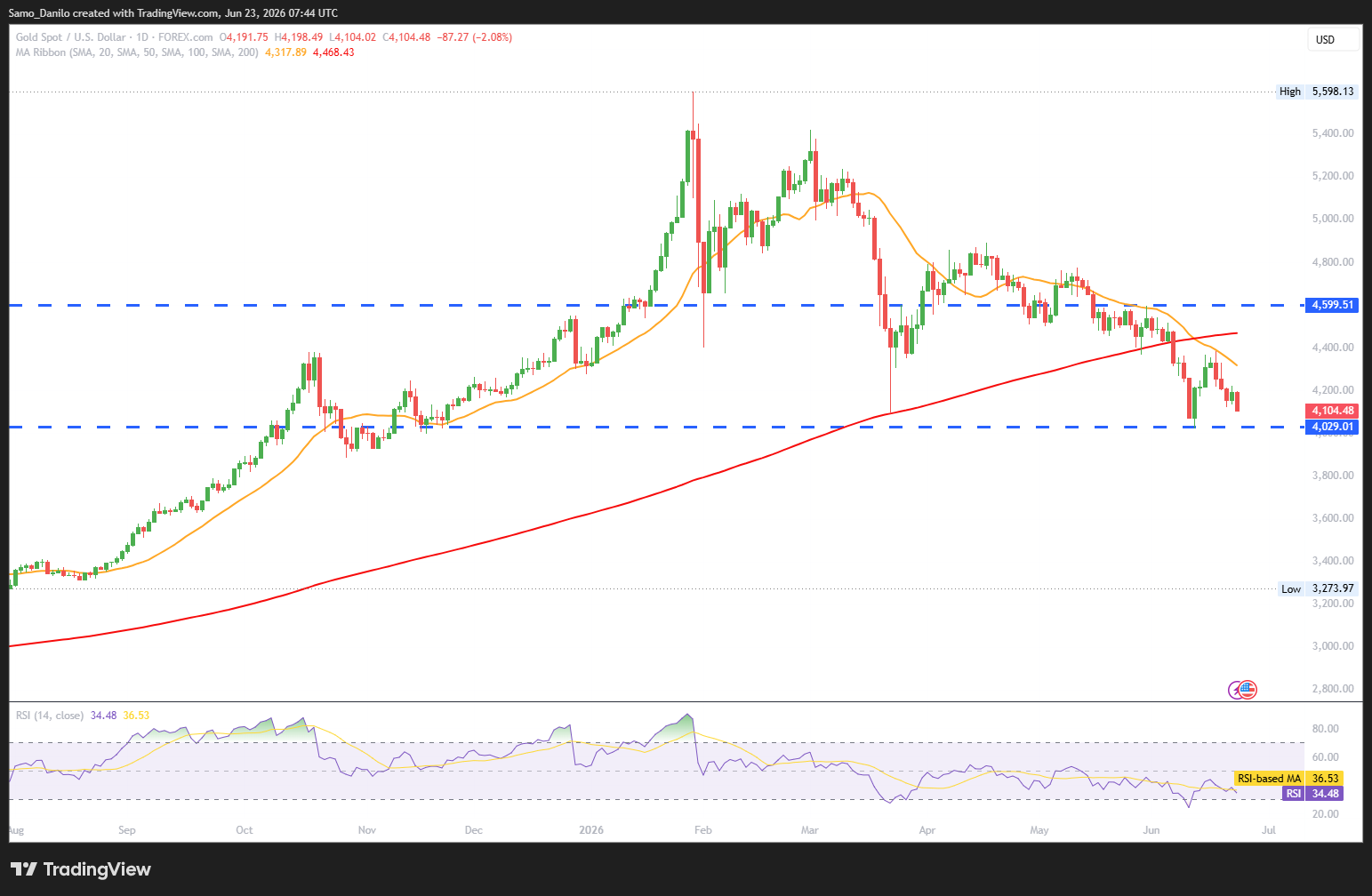
| SMA (20) | Slightly Falling | |
|
| RSI (14) | Falling | | |
| MACD (12, 26, 9) | Falling | | |
Closing statement: Gold remains under pressure as a stronger US Dollar and growing expectations of further Federal Reserve tightening outweigh persistent geopolitical risks. The upcoming US Core PCE inflation report is likely to determine the metal's next major move, with stronger inflation data favoring further downside and weaker figures offering the potential for a short-term recovery.
CRUDE OIL
- Crude Oil Price: WTI crude oil is falling sharply toward the $72 per barrel level during Tuesday's session, extending its recent losses.
- Strait of Hormuz: Oil prices remain highly volatile as Iran and the United States continue to issue conflicting statements regarding the operational status of the Strait of Hormuz.
- Saudi Arabia strategy: Saudi Arabia has significantly increased imports of Russian fuel oil to compensate for reduced domestic energy production caused by the Hormuz crisis. By using imported fuel oil for domestic power generation, the Kingdom is able to preserve more of its crude oil for export through the Red Sea port of Yanbu, helping maintain global supply and easing upward pressure on oil prices.
- US airlines: The recent decline in crude prices is expected to reduce the US airline industry's annual fuel costs by more than $40 billion. Lower energy expenses could significantly improve profitability across the aviation sector after earlier concerns that elevated fuel prices would sharply reduce industry earnings.
- Energy security: The UK's National Energy System Operator (NESO) stated that electricity supplies are expected to remain sufficient throughout the upcoming winter despite recent disruptions linked to the Strait of Hormuz.
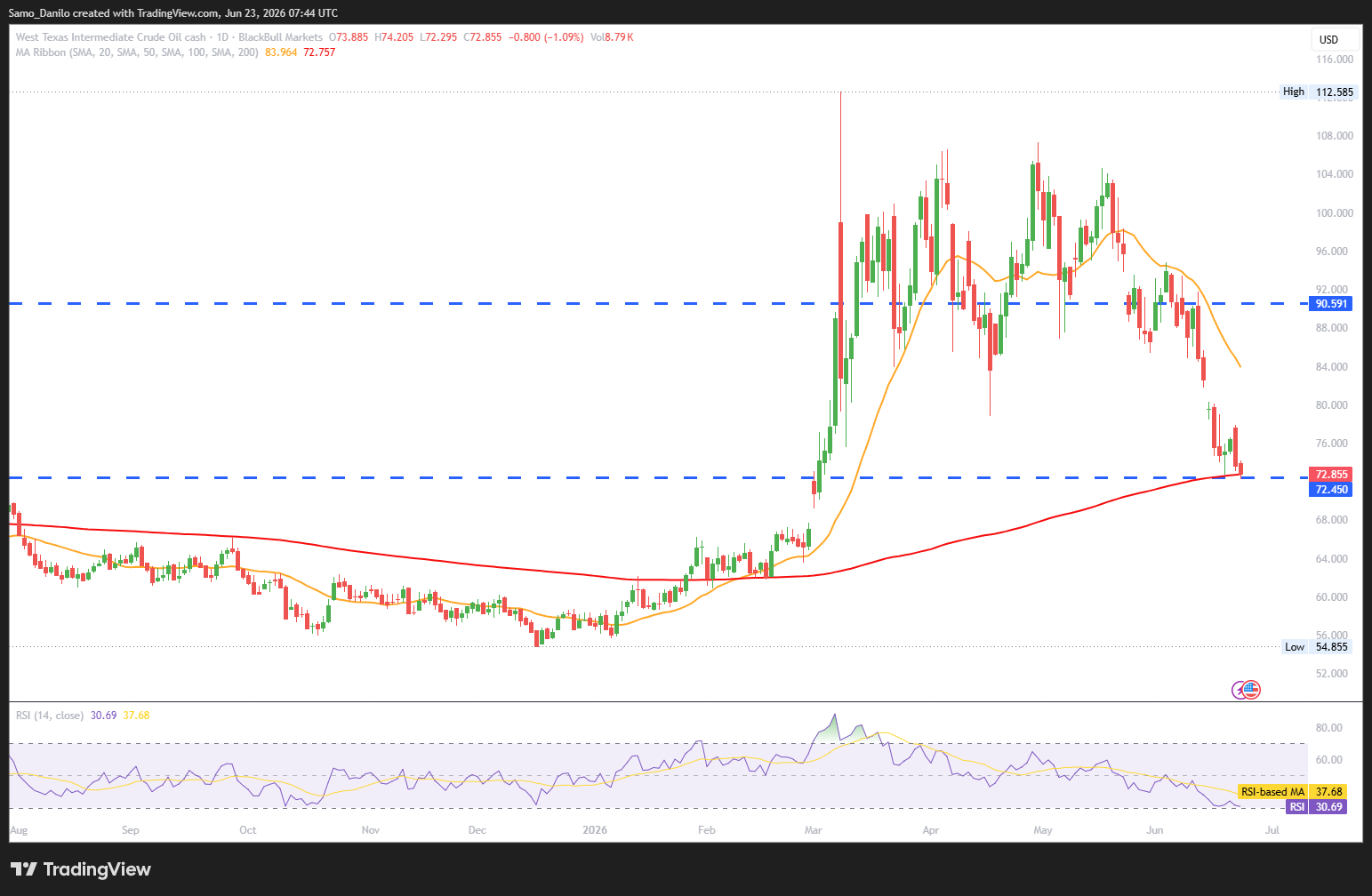
| SMA (20) | Falling | | |
| RSI (14) | Falling | | |
| MACD (12, 26, 9) | Falling | | |
Closing statement: WTI remains under heavy pressure as improving supply conditions, lower geopolitical risk premiums, and confidence in alternative export and energy supply routes continue to weigh on prices. While uncertainty surrounding the Strait of Hormuz could still generate short-term volatility, the overall market tone has shifted toward a more bearish outlook as concerns over sustained supply disruptions continue to fade.
DAX
- DAX 40 Price: The DAX 40 declined sharply during Tuesday's European session, slipping below the psychologically important 25,000-point mark.
- Lagarde's comments: Markets interpreted ECB President Christine Lagarde's latest remarks as moderately dovish, reinforcing the view that the ECB's key policy rate is unlikely to move significantly above its estimated neutral range of 1.75% to 2.50%.
- BMW rating: Bernstein Research reduced its price target for BMW from €108 to €85 while maintaining an "Outperform" rating. The revision suggests that analysts expect greater pressure on earnings or valuation, but still believe the company is well-positioned to outperform peers over the longer term.
- Hydrogen investment: Germany and Denmark have committed €1.3 billion in subsidies to develop three large-scale green hydrogen projects and establish a cross-border hydrogen supply corridor. The initiative represents a significant step toward building Europe's hydrogen economy and could benefit industrial, engineering, and clean energy companies over the long term.
- PMI data: Investors are closely watching the release of Flash PMI surveys from France, Germany, and the broader Eurozone for an updated assessment of business activity.
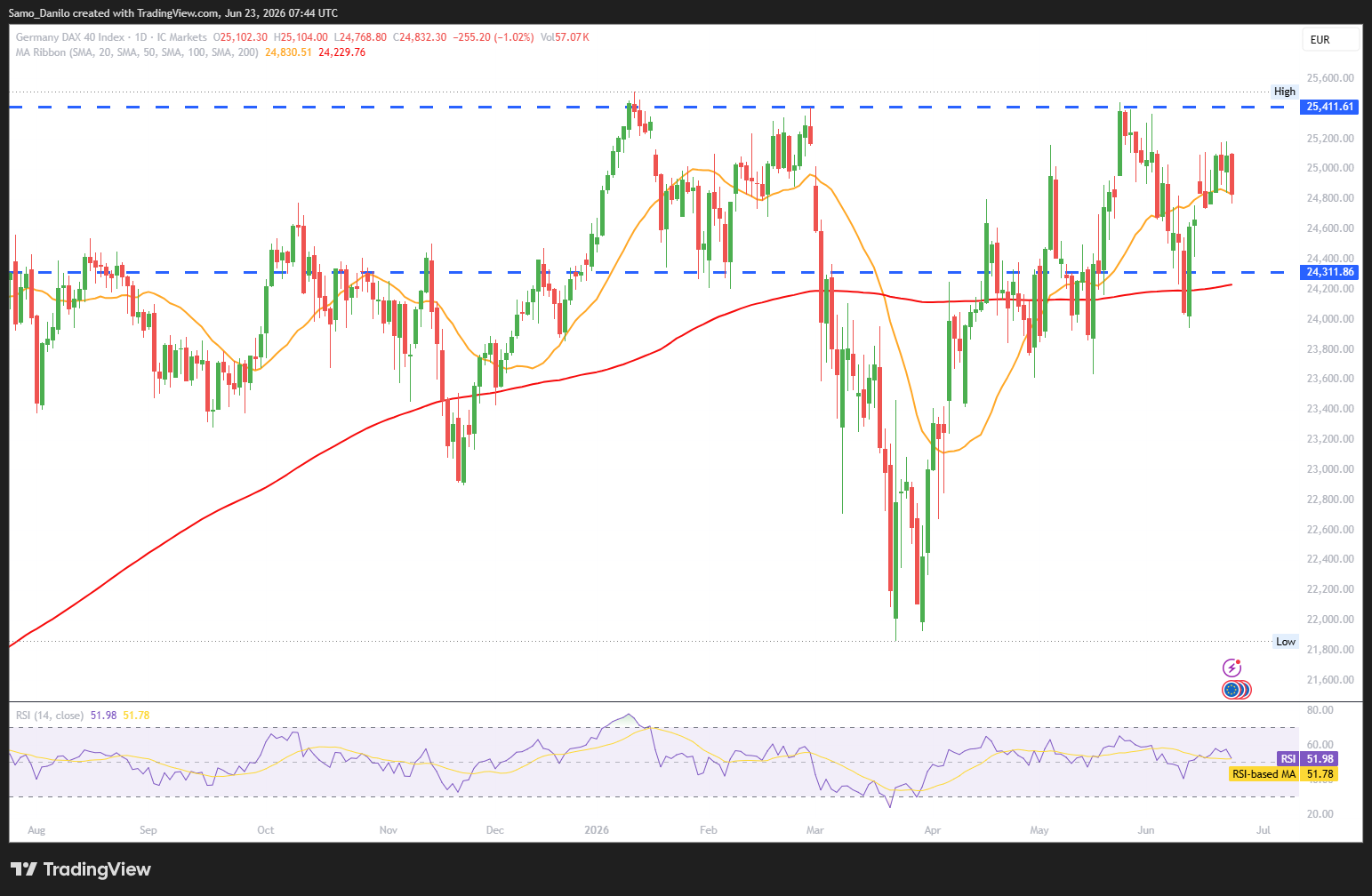
| SMA (20) | Slightly Rising |  |
| RSI (14) | Slightly Rising | |
| MACD (12, 26, 9) | Slightly Rising | |
Closing statement: The DAX is trading under pressure as investors balance a more dovish ECB outlook with uncertainty over the strength of the Eurozone economy. While expectations of limited additional rate hikes may provide medium-term support for equities, the index's near-term direction will likely depend on whether the latest PMI data confirm improving business activity or signal a further slowdown.